
Abstract
External Market Structure Shift (External MSS) represents a structural transition occurring after liquidity removal and directional displacement.
This research examines whether external structural shifts precede meaningful imbalance formation and intraday continuation.
Unlike internal micro-structure changes, external MSS reflects a broader liquidity transition.
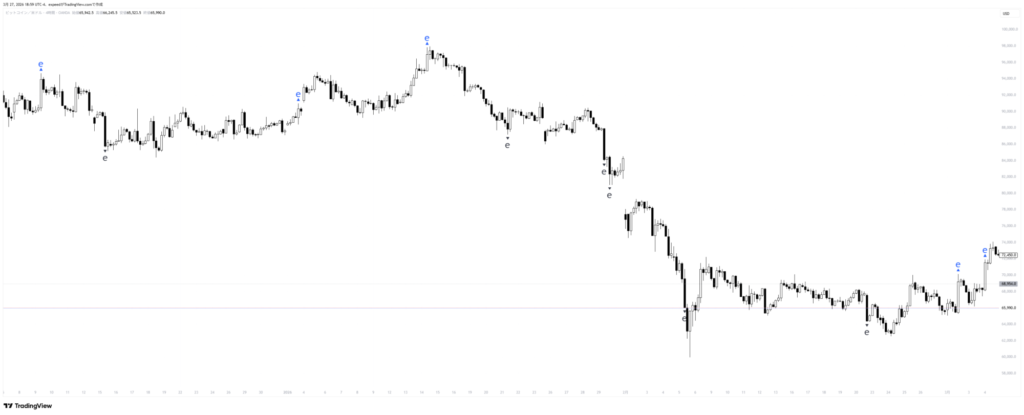
External MSS is typically observed following displacement and preceding initial imbalance formation.
Conceptual definition
External MSS is defined as: A structural break occurring beyond internal range boundaries following displacement.
Characteristics:Typical observed sequence:
- Liquidity Pool
- Sweep
- Displacement
- External MSS
- First FVG formation
- Continuation
This position External MSS as a transition trigger.
What’s External MSS and Internal MSS ?
External MSS
- Breaks major swing
- Follows displacement
- Higher continuation probability
Internal MSS
- Occurs inside range
- Often noise
- Lower directional reliability
- Observed Behavior
External MSS often leads to:
- Reduced retracement depth
- Faster expansion
- Cleaner directional flow
Internal MSS frequently results in:
- Range continuation
- Liquidity rebalancing
- No expansion
- Relationship to First FVG
External MSS typically occurs:
- Immediately before the first imbalance.
This suggests:
- External MSS → Structural intent
First FVG → Repricing - Together they form a structural transition model.
- Session Dependency
Higher reliability observed during:
- London Killzone
- New York Killzone
- Post-Asia liquidity sweep
Lower reliability:
- Asian session
- Mid-session consolidation
- Practical Interpretation
External MSS indicates:
- Liquidity removal complete
- Structural transition active
- Expansion phase probable
However, execution parameters are intentionally omitted.
Research Position
This page presents observational behavior only. Statistical validation is ongoing.
Related: First FVG · Session Transition